
-
 About Us
-
 Vehicle & Transportation Wiring Solutions
-
 Industrial Connectivity
-
 Custom Engineering & PCBA
-
 Customization
-
 Quality Control
-
 Resources
-
 Newsroom
-
 Contact Us
About Us
Vehicle & Transportation Wiring Solutions
Industrial Connectivity
Custom Engineering & PCBA
Customization
Quality Control
Resources
Newsroom
Contact Us

Newsroom
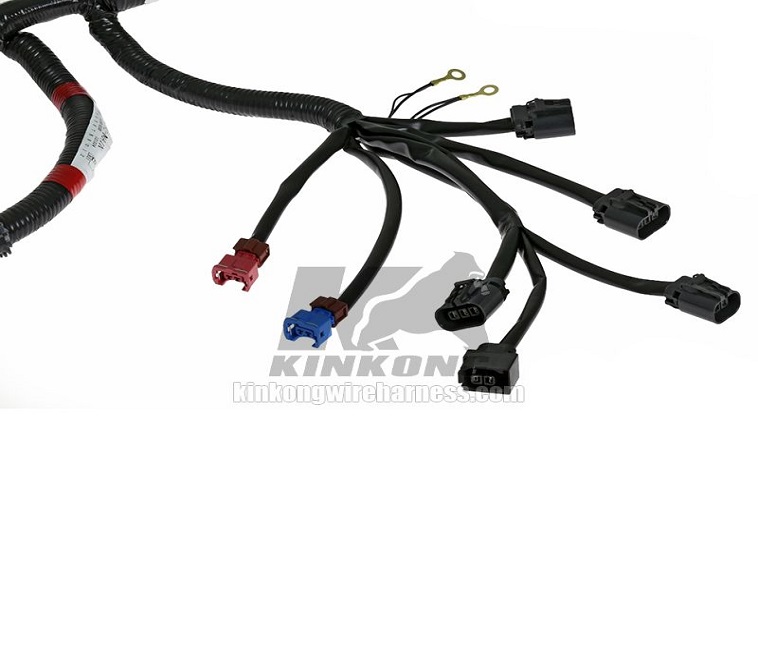
The electrical safety of automobiles has always been a major concern for automobile manufacturers, and the working environment in each area may have an impact on the wiring harness. The wiring harness is the nerve system of the car's electrical appliances, so water resistance is one of the elements of the harness design that should not be ignored. Therefore, this article will briefly analyze the waterproof design of wiring harnesses.
There are four types of automotive wire harness winding methods: semi-encapsulated winding, coarse winding, double winding, and 2/3 encapsulated winding. The so-called semi-encapsulated winding method and bundle the wires into a bundle, the width of the insulation tape is about 1/2 times winding, the middle wire is invisible, the insulation tape surface is not exposed; while the coarse winding method is to bundle the wires into a bundle, the width of the insulation tape spacing is 0 to 1.5 times the width of the tape winding, the insulation tape surface is not exposed.
Front cabin harness, powertrain harness direct contact with the outside world, need to do special waterproof treatment, the harness requires the use of the semi-encapsulated winding method; rain or car wash conditions door harness has a high probability of contact with water, so the door harness also need to do special waterproof treatment, require the use of the semi-encapsulated winding method, in order to prevent water into the harness to cause a short circuit to affect the safety of the car. For the need to do special waterproof treatment of the wire harness, its branches need to be cross-wrapped, requiring no bare wire harness; plus waterproof rubber ring and over-hole rubber sleeve area, requiring the wire harness first semi-encapsulated winding method, and then the rubber ring or rubber sleeve and the wire harness for double winding method.
As the wiring harness winding is crucial to waterproof, so the harness manufacturer must be required to wind as required to ensure the safety of automotive electricity.
According to the distribution of dry and wet areas of the car, we divide the car harness into the following parts: front cabin harness, powertrain harness, instrument harness, interior harness, roof harness, four-door harness, and back door harness. According to the distribution of the wet and dry areas of the car, the front cabin harness, powertrain harness, and four-door harness are located in the wet area, this part of the harness needs to do waterproof protection treatment, and the part connected with the interior should use rubber parts to seal. The rest of the harness is located in the dry zone, the connector does not need to choose the waterproof type, but the connection with the outside world in order to prevent water into the interior should also do the corresponding waterproof treatment.
The water depth of the car refers to the deepest water that the car can pass, which is also the safety depth. The area below the wading line and the engine compartment is called the wet zone, and the area where the wire harnesses installed in the driver's cab, passenger compartment, luggage compartment, and other parts do not require special waterproof protection is called the dry zone. In order to improve the water-resistance of the car and the safety of the car, the design of the electrical system should take into account the water depth of the car and arrange the key electrical components in the dry zone.
We are a manufacturer of automotive wire harness seals, please feel free to contact us if you need them.